
Commercial Subleases
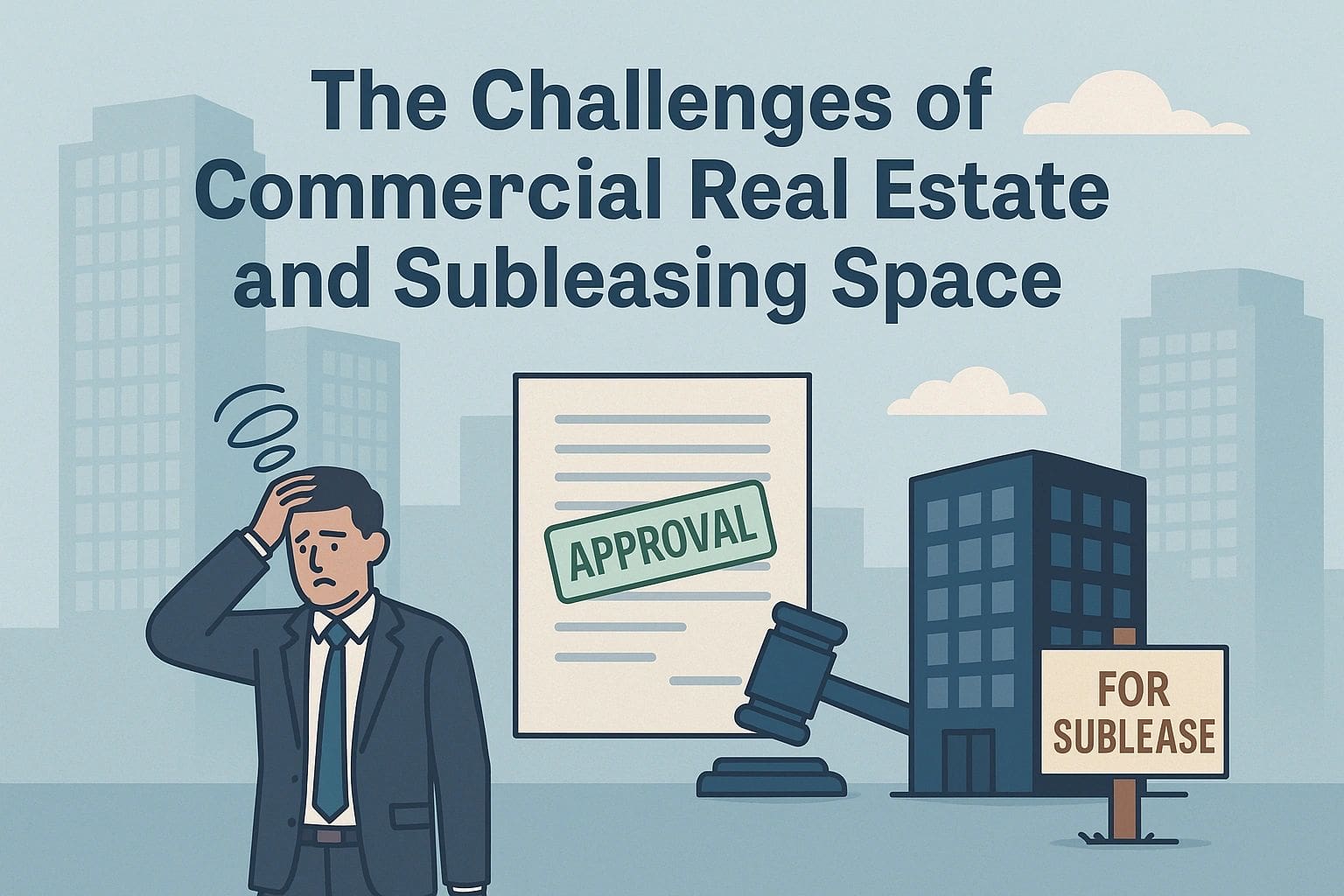
Subleasing in Commercial Real Estate: Why It’s Not as Simple as It Looks
Subleasing space has become a hot topic in commercial real estate. Companies with more square footage than they need often see it as an easy way to cut costs, while smaller businesses look at subleases as a golden ticket into prime buildings at a discount.
On the surface, it sounds like a win-win. But anyone who’s gone through the process—especially when dealing with large institutional landlords—knows it can be more complicated than it appears. Both tenants and subtenants face hurdles that can drag out deals, add uncertainty, and create hidden risks.
Why Tenants Sublease (and Why It’s Harder Than Expected)
For tenants, subleasing helps soften the blow of carrying too much space. Maybe headcount shrank, hybrid work reduced office needs, or a retail concept didn’t perform as expected. Handing that space off to another business seems like the perfect fix.
But there’s a catch: tenants are still ultimately responsible for the lease. If the subtenant can’t pay or violates terms, the original tenant remains on the hook. That risk means landlords want a say in who takes over.
Institutional owners—think big REITs or private equity landlords—often have detailed approval processes. They’ll want financials, business plans, even personal guarantees. Approvals can take weeks or months, during which tenants are still paying full rent. In fast-moving markets, those delays can kill a deal.
What Subtenants Need to Know
From the subtenant’s side, a sublease can feel like a steal: the right building, a ready-to-use space, and usually at a lower rent than a direct lease. But those benefits come with strings attached.
Approval headaches: Just like the tenant, subtenants have to win over the landlord. Institutional owners won’t rubber-stamp anything—they vet subtenants almost as carefully as direct tenants.
Fewer rights: Subtenants rarely get the same protections. Renewal options, expansion rights, or the ability to negotiate future changes usually aren’t on the table.
Risk by association: If the main tenant defaults or runs into financial trouble, the subtenant’s lease can collapse with it, no matter how well they’ve paid.
Use restrictions: Large landlords are picky about tenant mix. A subtenant’s business may not fit with existing restrictions or the building’s long-term plans.
The bottom line: what looks like a shortcut into prime real estate can quickly turn into a maze of approvals and limitations.
Why Landlords Make It Complicated
It’s easy to see institutional landlords as gatekeepers, but their perspective matters too. Their priority is preserving the long-term value of the building. The wrong subtenant could disrupt the tenant mix, create conflicts, or hurt the property’s reputation.
That’s why they negotiate strong approval rights into leases—and use them. The result is a lot of friction. Deals stall, tenants carry costs longer, and subtenants sometimes walk away.
Tips for Making Subleases Work
So, how can tenants and subtenants increase their chances of success?
Start conversations early. Tenants should get landlords involved as soon as they know they want to sublease. A polished package with financials, use plans, and references goes a long way.
Be realistic about timing. Subleases aren’t fast. Build extra time into the process to avoid costly surprises.
Know your limits. Subtenants need to understand they’ll have fewer rights and more risk than direct tenants. Get clarity on what’s included and what’s not.
Bring in experts. Brokers and real estate attorneys who know the sublease landscape can smooth negotiations and keep deals alive.
Consider alternatives. Sometimes an assignment of lease or even a new direct deal with the landlord works better than a sublease.
Final Thoughts
Subleasing isn’t a magic bullet for tenants or a shortcut for subtenants. It’s a complex process, especially when large institutional owners are involved. For tenants, it’s about reducing costs without giving up control. For subtenants, it’s about opportunity balanced against risk. And for landlords, it’s about protecting the long-term value of their asset.
When all three parties find alignment, subleases can work beautifully. But getting there takes patience, planning, and a clear understanding of the challenges.
Rafael Amador